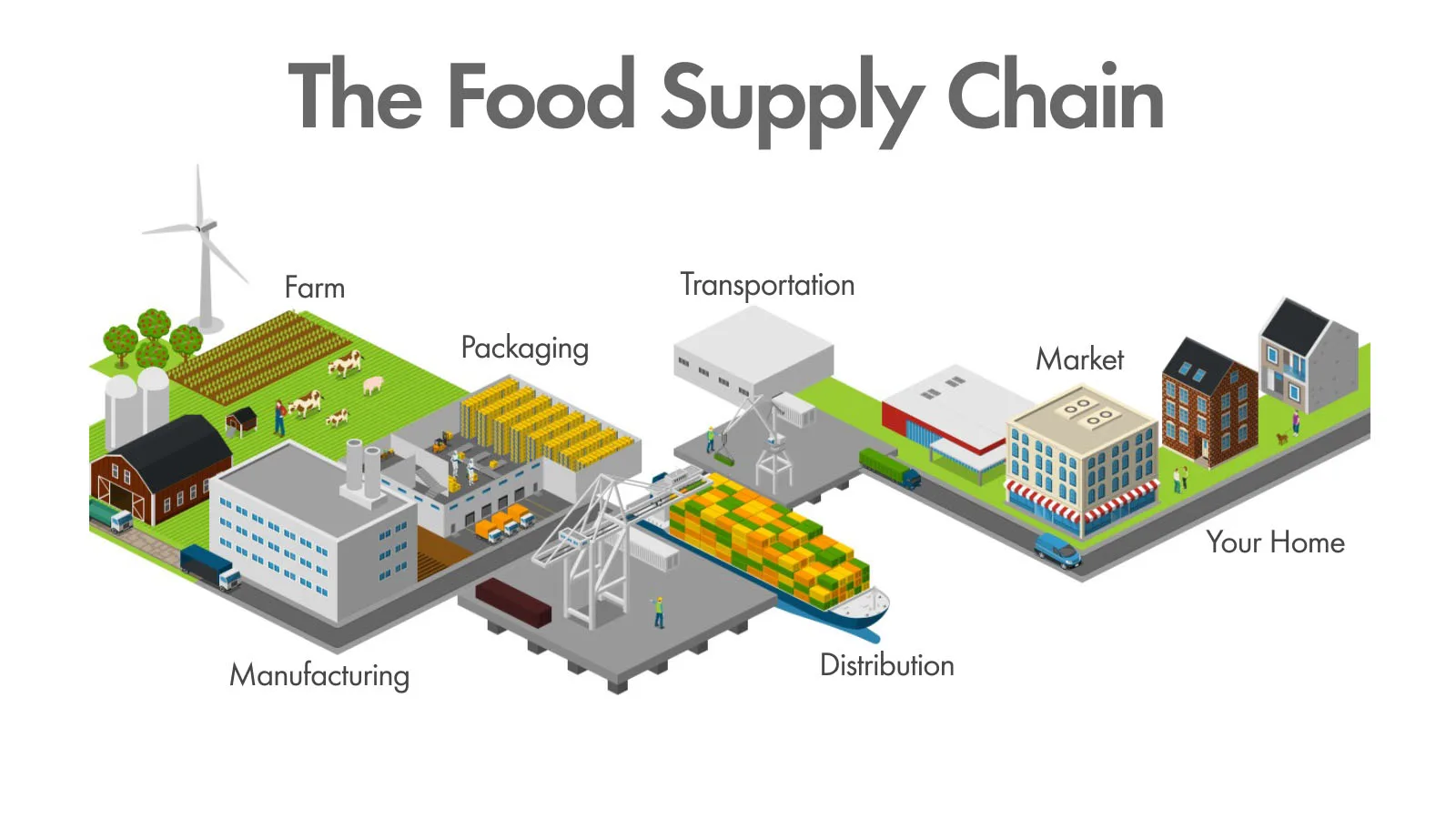
The Food Production Cycle incorporates various stages, starting with agricultural practices like farming and fishing, through processing, transportation, distribution/retail, and consumption. However, at each step, food waste occurs; some more than others, but every stage holds significant numbers. When this food waste ends up in landfills and decomposes, it produces certain gasses that harm the environment and contribute to a large number of greenhouse gasses emitted. The process of these gasses emitted underscores the critical need for efficient food production, distribution, retail, and consumption practices to minimize food waste and alleviate gas emissions.
What is the Food Production Cycle: The Production Phase
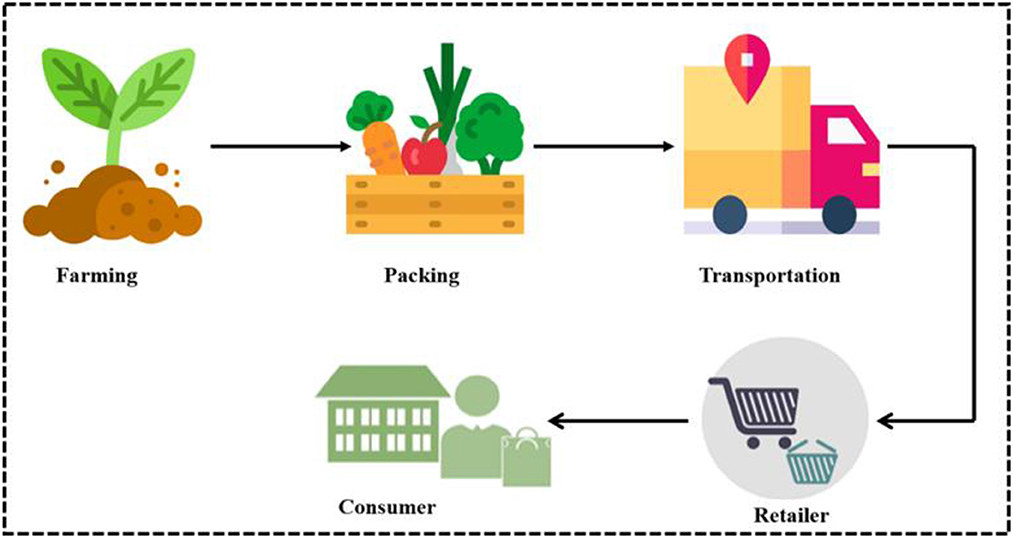
The food production cycle is a series of interconnected processes aimed at bringing food from farm to table. It begins with agricultural practices such as planting crops, raising livestock, and cultivating agriculture, known as the production phase. Farmers use various techniques to nurture and maintain the health of crops and animals, including soil management, irrigation, pest control, and animal management practices. Throughout the production phase, the quality of the food depends on many factors, mainly the weather. Droughts, flooding, extreme temperatures, frost, hailstorms, high winds, hurricanes, and tropical cyclones are the most common major and minor weather events that alter the production stage. This stage of the food production cycle is responsible for 17% of all food waste. This occurs because some food farmed doesn’t meet aesthetic standards which results in unintentional food loss. However, a large collection of food waste in the production stage is caused by poor weather and insufficient storage facilities. This causes quick food spoilage, resulting in food waste.
What is the Food Production Cycle: The Distribution Phase
After the production phase in the food production cycle is the distribution phase. This is the time when transportation occurs. This phase includes packaging, storage, and logistics. When talking about food waste, this phase is responsible for 15% of food waste. There are many reasons for this: handling during transportation, excess inventory, quality standards, and supply chain disruptions. During transportation, food can easily be spoiled due to the lack of storage infrastructure. For example, some foods thrive at certain temperatures; frozen strawberries should not be stored at the same temperature as grapes. Rough handling during this process heavily contributes to inadequate packaging for retail, which will not meet policy standards, leafing to food waste. Excess inventory is also a contributing factor to food waste during the distribution phase. When more products than needed are stored in warehouses, distribution centers, and retail outlets, these items will start to spoil resulting in a short shelf-life and lack of necessity by consumers. Generally this is caused by an overestimation of demand. Sometimes, producers or distributors may overestimate the demand for certain food products, leading to excessive production, storing, and stocking. During this phase, quality standards are also put in place to maintain food safety, integrity, and quality as they move through the food chain. When food is not held at the correct temperatures, provided with the correct labels and packaging, or look aesthetically pleasing to the retailers, this food is discarded as well.
What is the Food Production Cycle: The Retail Phase
The retail phase of the food production cycle refers to the part when food is sold directly to the consumers through various grocery stores, fresh markets, gas stations, etc. This phase includes product display and merchandising, quality assurance, and food safety and hygiene. The retail phase is responsible for 6% of all food waste throughout the supply chain. Retailers are responsible for stocking food items on the shelves at the right temperatures and checking on certain items to maintain safety and hygiene. Retailers manage inventory levels to ensure that sufficient quantities of food products are available to meet consumer demand. Retailers are also responsible for inspecting incoming shipments of food products to ensure they meet quality standards and comply with regulatory requirements. Products that do not meet quality criteria may be rejected and returned to the supplier or immediately wasted. All establishments must adhere to food safety and hygiene regulations to prevent contamination, spoilage, and food borne illnesses.
What is the Food Production Cycle: The Consumer Phase
The consumer phase is the last and final stage of the food production cycle. This is where costumers inside of stores decide to buy certain food items. This includes both the act of purchasing food products and peoples use in meal preparation and consumption. However, a staggering 62% of all food waste throughout the supply chain occurs here. If we get down to the real problem we can see that this occurs because of over-purchasing, expiration and spoilage, portion sizes, food appearance, label misinterpretation, and the lack of awareness. Many people tend to buy more food than needed which leads to excess food at home. This can occur due to bulk purchases, especially of items with a short shelf-life, impulse buying, or lack of meal planning. One way to help our world’s environmental and social state is to make a grocery list of items you actually need. If you want more than you need, of those items, purchase ones with a longer shelf-life and ones you are certain will be eaten. When items with a short shelf-life are purchased, they will spoil faster and quickly become unwanted, resulting in food waste. Now, not all food waste in the consumption phase refers to food being wasted in homes, but also in restaurants and economic food chains. Many restaurants serve large portion sizes served in which may result in uneaten food being left on plates. Consumers may feel obligated to finish their meals or may not have access to suitable storage containers to save leftovers for later consumption. Oftentimes many people are unaware of the food waste epidemic. If we all became a little bit more conscious about what we eat and what we don’t, we could help save the environment and our neighbors who live on it and next to us.
Leave a Reply