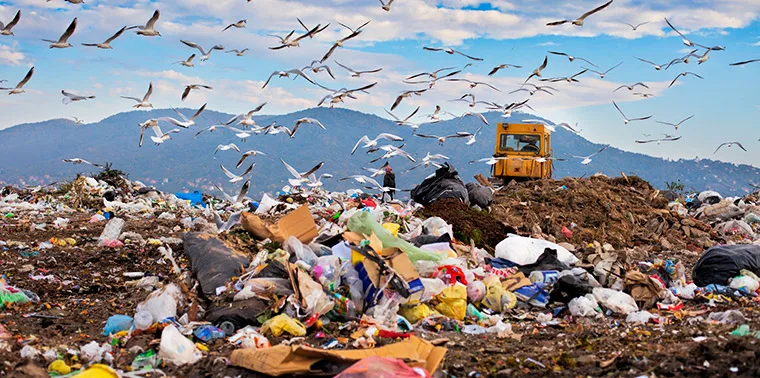
When food waste decomposes, it releases many gasses that contribute to global warming. These gasses are called greenhouse gasses because they raise the surface temperature of the earth. “Food waste and loss account for a staggering 8-10% of global greenhouse emissions,”(“EIT Food.” Tackling Food Waste and Food Loss: A Supply Chain Reaction. EIT Food, 22 Sept. 2023). Understanding how food waste contributes to greenhouse gas emissions is crucial for many reasons: environmental impact, economic implications, food security, sustainable development, and public awareness and policy making.
What Prominent Gasses Do Landfills Emit?
When food waste is taken to landfills to decompose, it releases chemicals and toxins, especially known as greenhouse gasses. The most commonly known and understood gas is Carbon Dioxide. Carbon Dioxide traps heat into the earth’s atmosphere. When sunlight reaches the Earth, some of it is absorbed and re-emitted as infrared radiation (heat). However, greenhouse gasses absorb this heat and re-radiates it back to the earth, warming the planet. When carbon dioxide gets emitted from food waste and starts warming the planet, polar ice starts melting, extreme weather events occur, and lots of changes in weather patterns happen.
Besides carbon dioxide, a more potent gas is released: methane. Methane gas is 84 times more effective at trapping heat inside the Earth’s atmosphere than carbon dioxide. Methane gas is produced naturally from wetlands, termites, and the oceans. However, it is also produced by human-related sources such as fossil fuel extraction and use, livestock farming, rice paddies, landfills, and decomposing food waste. “Methane is the primary contributor to the formation of ground-level ozone, a hazardous air pollutant and greenhouse gas,”(United Nations Environment Programme. “Methane Emissions Are Driving Climate Change. Here’s How to Reduce Them.” United Nations, 20 Aug. 2021).
Benefits of Reducing Food Waste
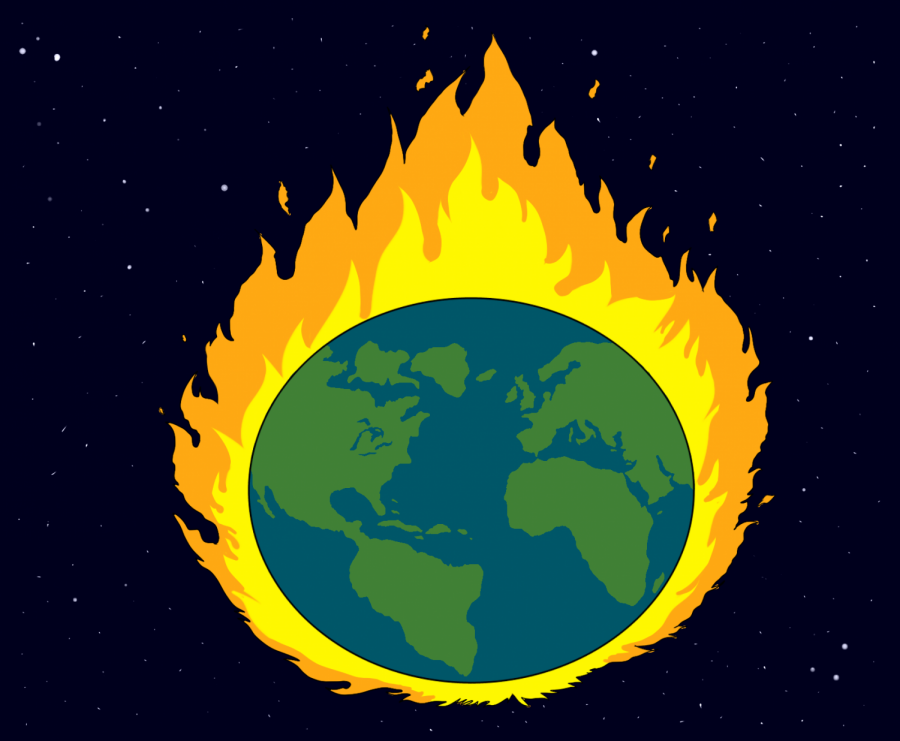
There are many benefits when food waste is reduced including economic, environmental, food security, community benefits, and resource efficiency. If food waste was reduced by 15% there would be over 25 million Americans fed. The economic benefits would be great. When consumers only purchase the food they need instead of purchasing items in bulk with short-shelf life, they will save money. Also, when farmers only produce the items people need, they are bound to save money as well. If we stopped reducing all food waste, global emissions would be reduced by 8-10% which would heavily reduce global warming. However, in order to reduce food waste, substitutes have to be produced. This means that oil manufactures and multiple human produced items and machines would have to be replaced with natural processes. The start-up cost for many businesses and manufacturers would be high but the positive environmental impacts would be even greater. This would also imply more efficient safety regulations throughout the production cycle, especially with storage and facility practices. As a community, we can stop reducing food waste one plate at a time.
Leave a Reply